
Proposition 320
What is Prop 320?
Proposition 320 is a statewide ballot measure that will be on the November 2026 ballot. If passed, Prop 320 would require certain school districts to spend at least 60% of their operational spending on direct instructional expenses. If approved, it would add Section 15-917 to the Arizona Revised Statutes.
Yuma School District One has established this webpage to provide the community with factual information regarding Prop 320. District One does not advocate for or against this ballot measure.
FY 2025 Direct Instruction Expenses
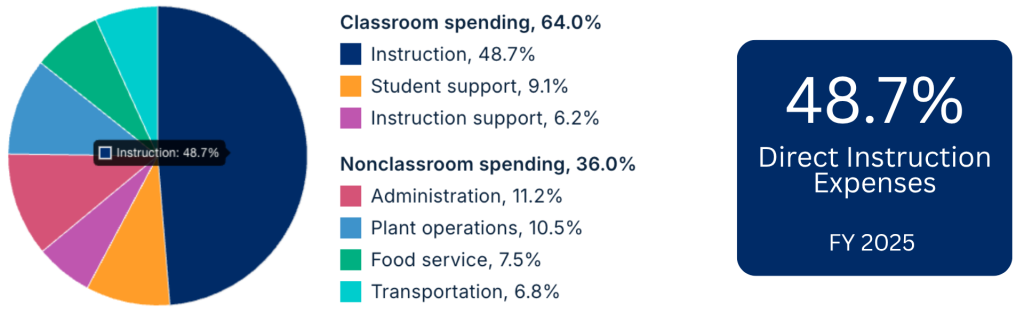
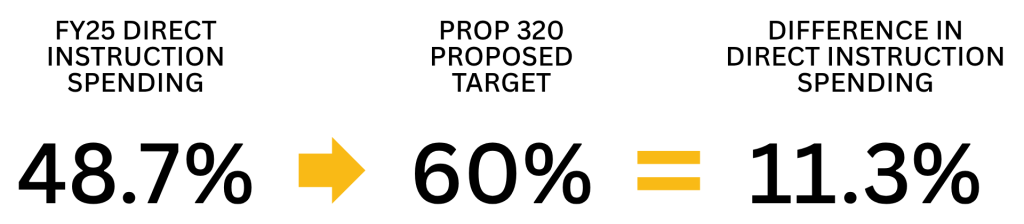
Expenses categorized as 60% Direct Instruction
Money spent for teachers, teachers’ aides, substitutes and instructional materials would count towards reaching the 60% threshold spent on “Direct Instruction.”
-
 Teachers
 -
 Teacher's Aides
 -
 Substitute Teahers
 -
 Instructional Supplies
Expenses that are not categorized as Direct Instruction
The following services are some of the areas that support students, but would not count towards 60% spent on Direct Instruction.
-
 Transportation
 -
 Food Services
 -
 Health Support Services
 -
 Speech Therapists
 -
 Counselors
-
 Para-Librarian
 -
 IT Related Services
 -
 SRO's and Security Services
 -
 Custodial, Maintenance & Grounds
Every area of our District serves students, but not all of it counts towards “Direct Instruction”
Under Prop 320, only expenditures classified as “Instruction” would cound toward the proposed 60% percent. Some services that directly serve students are not coded as direct instruction under the current definitions.
Expenses categorized as 60% Direct Instruction
Teachers
Instructional Assistants
Substitute Teachers
Instructional Supplies and Aids
Field Trips
Athletics and Cocurricular Activities
Tuition
Expenses that are not categorized as Direct Instruction
Student Support
Counselors
Psychologists
Nurses
Speech, occupational and physical therapy services
Social workers
Instruction Support
Teacher training
Instructional coaches
Curriculum development
Librarians
Media services
Information technology
Administration
Superintendents
Principals
Clerical services
Business services
Human resources
Governing Board costs
Plant Operations
Maintenance
Custodial services
Utilities
Security
School Resource Officers
Crossing guards
Food Services and Transportation
School meals
Buses
Drivers
Mechanics
Professional development and program offerings
Administration services -School and District administration clerical, accounting, payroll, human resources, purchasing, warehouse, technology, curriculum support, student services, communications
Operations services -building maintenance & repairs, fire alarm/security systems, liability insurance, costs for heating, cooling, lighting/utilities
Food services – food supplies and other costs related to serving student meals
Transportation services – costs for maintaining buses and transporting students
Loading document viewer...
Prop 320 Frequently Asked Questions
-
Every school district in Maricopa, Pima, and Pinal county, plus those with 7,500 or more students outside of the three counties. This currently includes Yuma Union, Yuma Elementary and Flagstaff Unified, along with small and rural districts within the three counties. It does not apply to charter schools. Whether it applies to Career & Technical Education Districts (CTEDs) has not yet been determined.
-
A "Yes" vote would:
- Require certain school districts to spend at least 60% of operational spending on direct instruction.
- Direct the Arizona Auditor General to define relevant terms.
- Reduce certain state funding for districts that do not comply with the requirement.
-
A "No" vote would keep current law in place. The proposed 60% spending requirement and related funding penalties would not be adopted.
-
No. Prop 320 does not change the sales-tax rate. Any reduced allocations remain in the Classroom Site Fund for the next year’s statewide distribution rather than being returned to taxpayers or another fund.
-
No. Proposition 320 does not provide additional funding. It instructs districts how to allocate their existing operational funds.
-
As defined by the Arizona Auditor General "direct instruction" includes:
- Teachers
- Teachers' aides
- Substitute teachers
- Graders
- Guest lecturers
- General instructional supplies
- Instructional aids
- Field trips
- Athletics
- Co-curricular activities
- Tuition
-
The following operational categories are identified as not counting toward direct instruction:
Student Support
- Counselors
- Psychologists
- Nurses
- Speech, occupational and physical therapy services
- Social workers
Instruction Support
- Teacher training
- Instructional coaches
- Curriculum development
- Librarians
- Media services
- Information technology
Administration
- Superintendents
- Principals
- Clerical services
- Business services
- Human resources
- Governing Board costs
Plant Operations
- Maintenance
- Custodial services
- Utilities
- Security
- School Resource Officers
- Crossing guards
Food Services and Transportation
- School meals
- Buses
- Drivers
- Mechanics
-
By dividing total spending in the instruction category by total day-to-day operational spending, using dollars actually expended.
-
Beginning in fiscal year 2028, districts below the 60% threshold would be required to increase their direct instruction share by at least 0.5 percentage points per year until they reach 60%. Increases greater than 0.5 percentage points in a year may be credited toward future years.
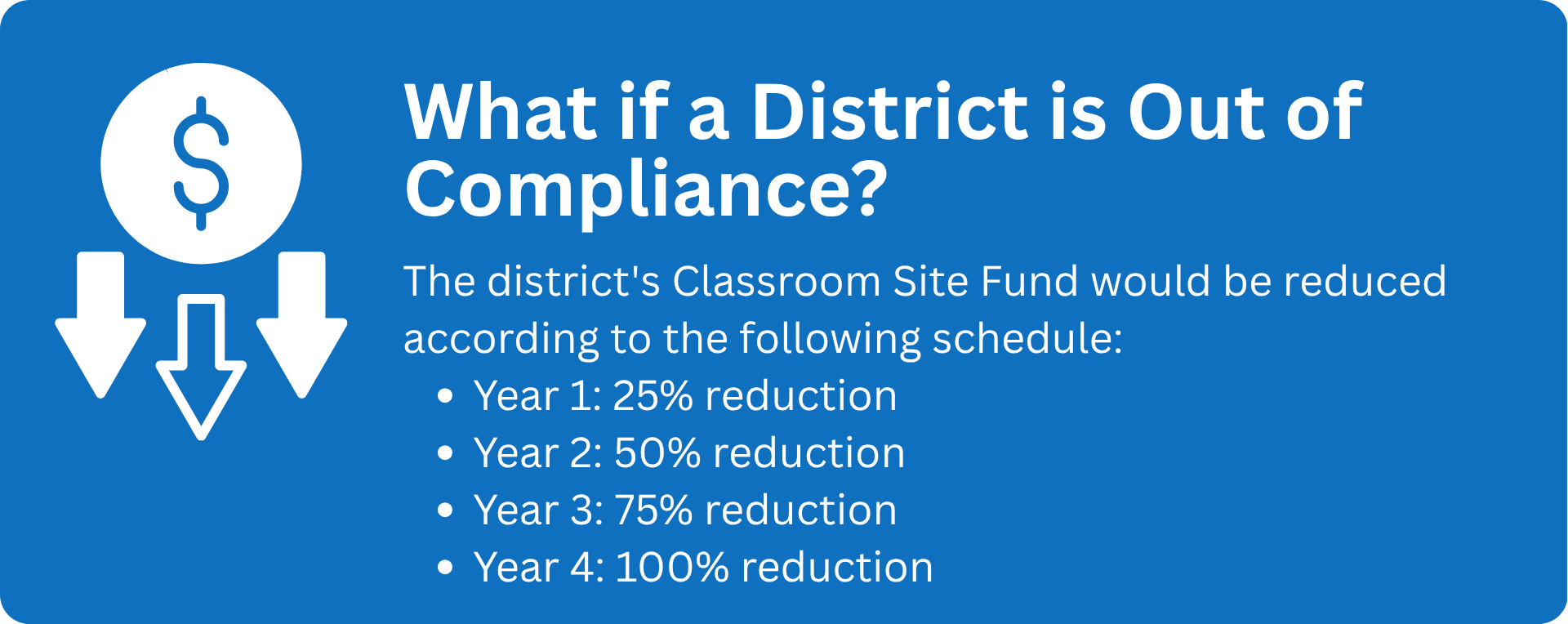
If a district is determined to be out of compliance, the Arizona Department of Education would reduce the district's Classroom Site Fund distribution according to the following schedule:
- Year 1: 25% reduction
- Year 2: 50% reduction
- Year 3: 75% reduction
- Year 4: 100% reduction
Waivers: The Superintendent of Public Instruction is allowed to provide a one-year waiver from the penalty to individual districts up to two times during a ten-year period.
-
Prop 320 was referred to Arizona voters by the Arizona Legislature. It was not initiated by local school districts.
-
If approved by voters, the new spending requirement would apply beginning in Fiscal Year 2027-28. The proposition establishes a process for districts below 60% to move toward compliance over time.
Beginning in fiscal year 2028, districts below the 60% threshold would be required to increase their direct instruction share by at least 0.5 percentage points per year until they reach 60%. Increases greater than 0.5 percentage points in a year may be credited toward future years.